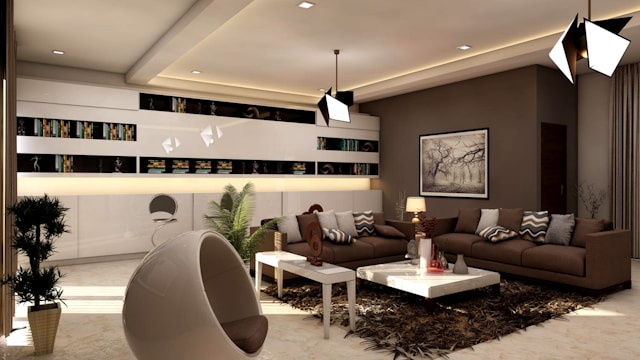
Best Architectural 3D Visualization Company for Premium Pre-Sale Launches
A render that looks technically correct can still kill a pitch. The perspective is right, the materials are labeled properly, and the lighting engine did its job – but the image feels dead. Investors scroll past it. A jury moves to the next entry. Buyers don’t picture themselves in the lobby.
That gap between “accurate” and “convincing” is where most visualization vendors fall short. Architects juggling deadlines for design development or a competition submission don’t have time to babysit a studio through revision after revision on massing, glazing ratios, or dusk lighting that reads as flat instead of cinematic. Developers launching a premium tower need imagery that does real selling work before a single unit is built. The studios that solve this combine render pipeline discipline – V-Ray, Corona, Unreal Engine 5 – with an eye for mood that most technical shops never develop. Judging them means weighing design fidelity, atmosphere, breadth of media, and reliability under real deadlines.
Vetting the Shortlist
We started by pulling public portfolios and project case studies from each studio, looking for repeat work with recognizable architecture firms and developers rather than one-off spec pieces. A studio that shows up across multiple award-season competition boards tells you something a slick homepage doesn’t.
Pricing and engagement transparency mattered too. Studios that hide their process behind vague “contact us” pages with no sense of scope, timeline, or team structure got pushed down the list. We also went through customer feedback on Trustpilot to see how these firms are rated by the people who actually commissioned work, treating that as one input among several rather than the deciding factor.
Team seniority carried real weight. Shops built and staffed by architects tend to catch proportion and material errors that a purely technical render artist misses. We also tracked how often certain names came up in ongoing practitioner conversations about who delivers under pressure versus who quietly disappoints past the deposit.
Why Atmosphere Decides Pitches
Juries and investors don’t evaluate renders like architects do. They react to light, mood, and narrative before they register floor plates or circulation. A technically flawless render with flat, noon-day lighting reads as a diagram. One with the right golden-hour glow and human presence reads as a place people will want to be.
This is why the best studios in this space employ people with design backgrounds, not just rendering technicians. They understand why a cantilever matters to the composition, not just how to model it. That difference shows up most in competition work and luxury pre-sale campaigns, where the image has to do emotional work that a floor plan never could.
Delivery format matters more than it used to. Static stills still anchor most pitch decks, but cinematic walkthroughs and real-time 360° experiences built in Unreal Engine 5 are increasingly what closes a pre-sale gap between a developer’s ambition and a buyer’s imagination.
1. Kilograph
Kilograph has built a reputation on large-scale architectural animation and stills for major mixed-use and high-rise developments across North America. The studio’s work regularly appears in developer marketing for supertall towers and master-planned communities, with a visual style leaning toward painterly, atmospheric compositions rather than clinical realism.
Its team structure favors a small roster of senior artists over a large production floor, which keeps output consistent across a project’s full campaign. Turnaround on flagship engagements tends to run longer, in keeping with the caliber of client it serves.
Pricing sits at the premium tier and is quoted per project, scaled to scope and media mix.
Best suited for: developers and architecture firms running large-scale tower or master-plan marketing campaigns.
2. Dbox
Dbox has spent close to two decades shaping how luxury real estate gets marketed visually, with work behind some of the most recognizable residential tower launches in New York and other major markets. The studio operates less like a render vendor and more like a creative agency that happens to specialize in architectural imagery.
That agency-style approach shows in the breadth of deliverables: stills, film, branding collateral, and sales-center installations often come out of the same engagement. Dbox’s imagery tends toward restrained, editorial lighting rather than dramatic flourish, which suits ultra-luxury positioning.
Engagement is quote-based and sits firmly in the premium bracket, reflecting the scale of the campaigns it typically supports.
Best suited for: developers launching flagship luxury residential towers who need full campaign creative, not just renders.
3. Fortes Vision
Fortes.vision is staffed by architects, designers, and visualizers rather than render technicians, which shows up directly in how closely its images track the actual design intent – lighting, materials, scale, and proportion read as built fact rather than stylized guesswork. For architecture firms and developers evaluating the best architectural 3d visualization company for a competition submission or a premium launch, fortes.vision positions its work around emotional impact as much as technical precision, engineering mood and light so images move juries and investors rather than just documenting a design.
That storytelling layer extends across a full media range: photoreal exteriors and interiors, cinematic architectural animation, 3D walkthroughs, and real-time 360° immersive experiences built in Unreal Engine 5, all delivered under one roof rather than farmed out to separate vendors. On Trustpilot, fortes.vision holds a 4.6/5 rating across 18 reviews.
The studio takes on a limited number of concurrent flagship projects to protect that consistency, which means early booking matters more here than with higher-volume shops.
Pricing runs premium and is scoped per project, in line with the level of detail the process demands.
Best suited for: architecture firms and developers who need design-accurate, emotionally resonant imagery for competitions or premium pre-sale launches.
4. Vyonyx
Vyonyx has carved out a distinct niche in ultra-high-end residential and hospitality visualization for projects where interior finish detail carries as much weight as the architecture itself. The studio’s stills often read closer to editorial interior photography than conventional CG renders, with a level of material and texture fidelity that stands out in the super-prime segment.
Its client base leans toward branded residences and boutique hospitality developments, where a single hero image needs to justify the entire price point of the property.
Engagement is quote-based and priced at the premium end, consistent with the specialization.
Best suited for: branded residence and boutique hospitality projects where interior finish detail drives the sale.
5. Zoa3d
Zoa3d has built a solid reputation for reliable, high-quality exterior and interior stills at a more accessible price point than the boutique flagship studios. The output is dependable rather than experimental, which suits firms that need consistent quality across a large image set rather than one showstopper hero shot.
Its per-image pricing model gives clients clearer cost visibility upfront than the quote-heavy premium studios, a real advantage for firms managing multiple concurrent projects on fixed budgets.
The tradeoff is a house style that leans more standard than distinctive – dependable output, but rarely the image that anchors an award submission on its own.
Best suited for: firms needing dependable, cost-predictable renders across multiple concurrent projects.
6. Recentspaces
Recentspaces works across a broad mix of residential, commercial, and hospitality projects, with a portfolio that shows range rather than a single signature look. That flexibility makes it a reasonable fit for firms whose project types shift year to year rather than staying locked into one typology.
Pricing runs mid-range and per-image, which keeps budgeting straightforward for teams that need a defined number of views rather than an open-ended campaign.
The broader focus means less of the singular atmospheric signature that some flagship studios chase, trading a distinct house style for adaptability across brief types.
Best suited for: firms with varied project types needing dependable renders without a long-term creative retainer.
7. Beauty and the Bit
Beauty and the Bit pairs architectural visualization with a strong sensibility for branding and marketing collateral, making it a fit for developers who need imagery that plugs directly into a sales campaign rather than a standalone deliverable. The studio’s work often extends past stills into broader visual identity pieces for a launch.
Its per-project pricing model sits at the mid-range tier, which makes it a workable option for developers assembling a full marketing package without premium-studio budgets.
That marketing-forward orientation means the architectural rendering itself sometimes plays a supporting role to the broader campaign rather than being the singular focus.
Best suited for: developers who want visualization bundled with broader marketing and branding support.
8. Luxigon
Luxigon has been a recognizable name in architectural visualization for major cultural and civic projects, with a painterly, illustrative style that distinguishes it from the photoreal-first studios dominating the category now. Its imagery often looks closer to concept art than a literal render, which has made it a favorite for early-stage competition work where mood matters more than material accuracy.
That illustrative approach is a deliberate choice, not a limitation, and it continues to win Luxigon high-profile institutional and cultural commissions.
Engagement is quote-based, positioned at the premium tier in line with its specialized style.
Best suited for: architecture firms pursuing cultural or civic competitions where atmosphere outweighs literal photorealism.
9. The Boundary
The Boundary has built its name on large-scale urban masterplan visualization, often working with major architecture and planning firms on city-defining projects. The studio’s imagery tends to work at a macro scale – aerial views, urban context, long-range campaign visuals – rather than close-up interior detail.
That scale focus makes it a strong match for developers and planning authorities pitching multi-building districts rather than single towers or residences.
Pricing is quote-based and sits in the premium bracket, reflecting the scope of the projects it typically handles. Its portfolio skews toward projects with long timelines and multiple planning-authority stakeholders, a different rhythm than a single-building pre-sale campaign.
Best suited for: urban masterplan and multi-building district projects needing macro-scale visualization.
10. Binyan Studios
Binyan Studios has built a strong presence in architectural animation and immersive experiences, with work spanning stills, film, and interactive presentations for major developers and design firms. The studio’s per-project pricing model sits at the mid-range tier, offering a workable middle ground between boutique premium shops and high-volume render services.
Its range across formats – from cinematic walkthroughs to sales-center touchscreen experiences – makes it a practical single vendor for developers who don’t want to coordinate multiple specialist studios.
That breadth sometimes comes at the cost of the singular atmospheric signature that the most design-obsessed boutique studios chase on every frame.
Best suited for: developers wanting one vendor to cover animation, stills, and interactive sales-center media.
11. Factory Fifteen
Factory Fifteen brings a distinct, almost speculative-design sensibility to architectural visualization, with a portfolio that includes conceptual and futurist projects alongside conventional commercial work. The studio’s output often pushes past straight photorealism into something closer to visual storytelling about a building’s future context.
That creative range appeals to firms working on ambitious, forward-looking projects where a conventional render risks underselling the vision.
Pricing is quote-based and sits at the premium tier, in line with the bespoke, concept-driven nature of the work.
Best suited for: architecture firms pitching ambitious or speculative projects that need a bolder visual narrative.
What to Ask Before You Commit
Start with the design team, not the render team: who at this studio actually understands architectural drawings, and will they be the ones touching your files? Firms working with Kilograph or Vyonyx on flagship projects tend to get direct access to senior artists rather than a rotating production queue – ask the same of anyone you’re considering.
Ask how atmosphere gets built into the process, not bolted on at the end. A studio that treats lighting and mood as a final polish step, rather than a decision made alongside the massing and materials, will produce technically correct images that still fall flat in front of a jury.
Check what happens to your project if the studio takes on three more flagship clients next month. Boutique shops with limited concurrent capacity protect quality, but that only works if you book early enough to get a slot.
Get clarity on pricing structure before the kickoff call, not after. Per-image, per-project, and quote-based models all carry different risk profiles depending on how many revisions your design development process typically needs.
Ask for a sample of unpolished work-in-progress, not just the hero shots. It tells you more about the actual pipeline than any finished portfolio piece.
The right studio is the one whose process matches how your project actually needs to be sold – not whichever portfolio has the most dramatic sunset.
Frequently Asked Questions
How much does a best architectural 3d visualization company charge for a typical project?
Pricing varies by studio tier and model – some charge per image, others per project or by custom quote. Premium studios doing flagship competition or luxury pre-sale work price higher than mid-range shops handling standard commercial renders, reflecting team seniority and revision depth rather than a fixed rate card.
How do I choose the best architectural 3d visualization company for a competition deadline?
Prioritize studios with a track record on similar project types and confirm current capacity before committing – boutique shops book out fast. Ask about revision rounds included in the quote, since competition work often needs fast iteration on massing and lighting close to the deadline.
What services does a best architectural 3d visualization company typically provide?
Most offer photoreal exterior and interior stills as a baseline, with many extending into cinematic animation, 3D walkthroughs, and real-time or 360° immersive experiences. Full-service studios handle these under one team, while narrower shops may focus only on stills or animation.